A manageable beginning
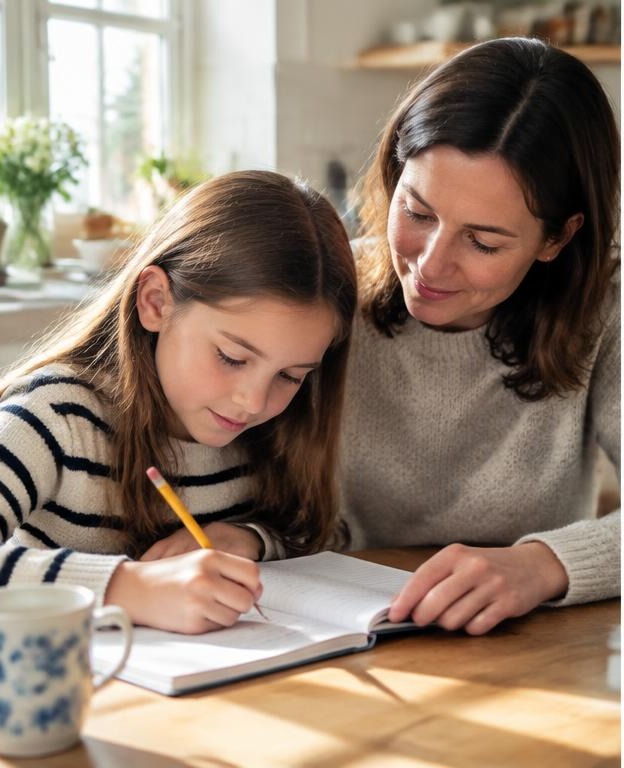
[SAMPLE TEXT] A long lesson is not always a productive lesson. When a child is tired, even familiar tasks can become difficult. A shorter session offers a clear beginning and end, making it easier to approach learning without worrying about an entire afternoon of work.
[SAMPLE TEXT] Choose one purpose before you begin. Today might be about checking sentence punctuation or understanding a paragraph, not both. A small focus gives you room to explain, practise and notice progress without constantly moving the goalposts.
[SAMPLE TEXT] A small step taken calmly is still a step forward.— Liz
Give ideas another visit
[SAMPLE TEXT] Returning to an idea on another day creates another opportunity to remember it. Instead of completing every exercise at once, leave a little for tomorrow. Begin the next session by asking what your child remembers, then offer a helpful prompt if needed.
Build a small lesson routine
[SAMPLE TEXT] Try a familiar sequence: revisit one idea, explore one example, and have a short independent go. End by asking what felt easier. A timer can make the finish visible, but it should not turn careful thinking into a race against the clock.

Find your family’s rhythm
[SAMPLE TEXT] Fit practice around your actual household. Some children enjoy a quiet morning; others need a snack and a pause after school. Choose a repeatable moment and allow flexibility. A missed day does not erase the useful learning that happened before it.
[SAMPLE TEXT] Notice your child’s energy as well as the work on the page. If a short session regularly ends in frustration, adjust the difficulty or offer more support. Consistency is helpful when the experience is manageable, not when a routine becomes another source of pressure.
Key takeaways
[SAMPLE TEXT]- Give each session one clear focus.
- Revisit ideas on different days.
- Adapt the routine to your child’s energy.

Hi, I’m Liz.
[SAMPLE TEXT] I share practical ideas to help families make English learning a little calmer, more enjoyable and full of possibility.
Little lessons. Big possibilities.
Make room for English that fits your family. Take the next little step with Good Day English.