Make space for conversation
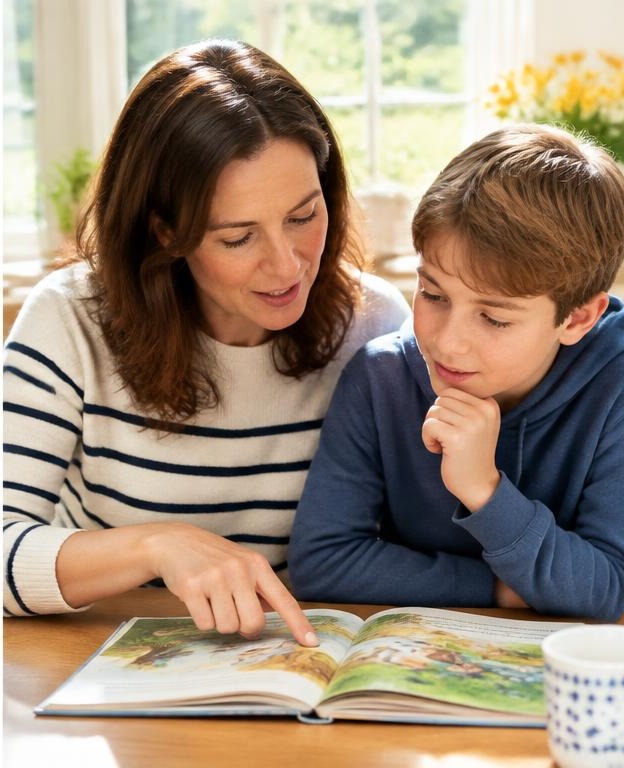
[SAMPLE TEXT] Reading a passage fluently is not quite the same as understanding it. Children may concentrate so hard on the words that the meaning slips past. A shared book gives you a relaxed chance to slow down and talk about what is happening.
[SAMPLE TEXT] Begin with an invitation rather than a test. Ask which part your child liked or what surprised them. Listen to their answer before adding another question. When a conversation feels genuine, children are more likely to explain their thinking in their own words.
[SAMPLE TEXT] The best reading questions open a conversation, not an examination.— Liz
Look back at the clues
[SAMPLE TEXT] Separate what the book says from what you think about it. If a character leaves the room suddenly, find the sentence that describes the action. Then wonder together why they might have left. Looking back is a reading strategy, not a sign of failure.
Pause for one thoughtful question
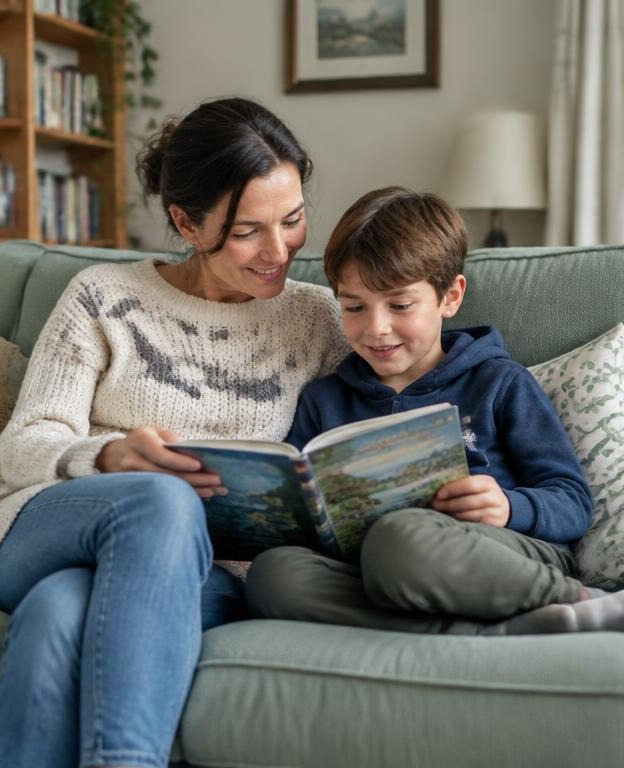
[SAMPLE TEXT] At the end of a short section, ask your child to tell you the most important event. A simple retelling helps them connect ideas. You can model this yourself with a sentence such as, “I think the problem started when the key went missing.”
Keep the pleasure in reading
[SAMPLE TEXT] Unfamiliar vocabulary can interrupt understanding. Choose one interesting word and explore it through the scene, a picture or a quick example. Avoid explaining every new word at once. Sometimes carrying on reading supplies exactly the context a child needs.
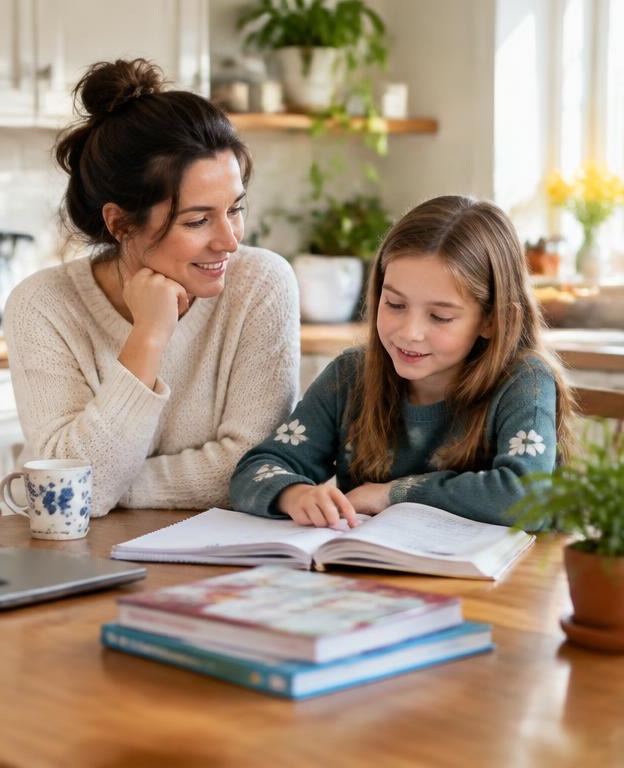
[SAMPLE TEXT] Close the book while there is still something enjoyable to say. You do not need a question for every page. Alternating quiet reading with occasional discussion keeps stories pleasurable and makes understanding something you build together rather than something you inspect.
Key takeaways
[SAMPLE TEXT]- Start with an open invitation to talk.
- Return to the text for evidence.
- Keep questions occasional and friendly.
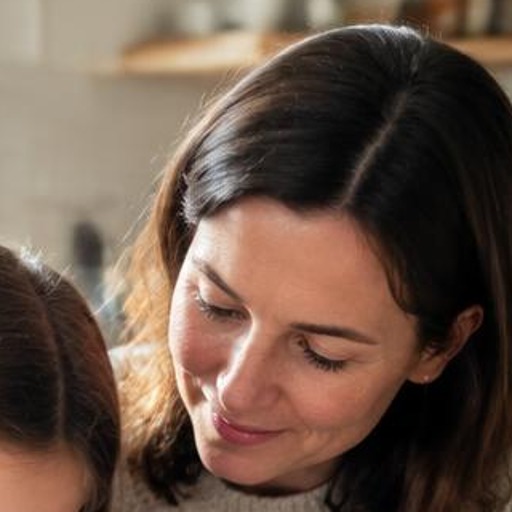
Hi, I’m Liz.
[SAMPLE TEXT] I share practical ideas to help families make English learning a little calmer, more enjoyable and full of possibility.
Little lessons. Big possibilities.
Make room for English that fits your family. Take the next little step with Good Day English.