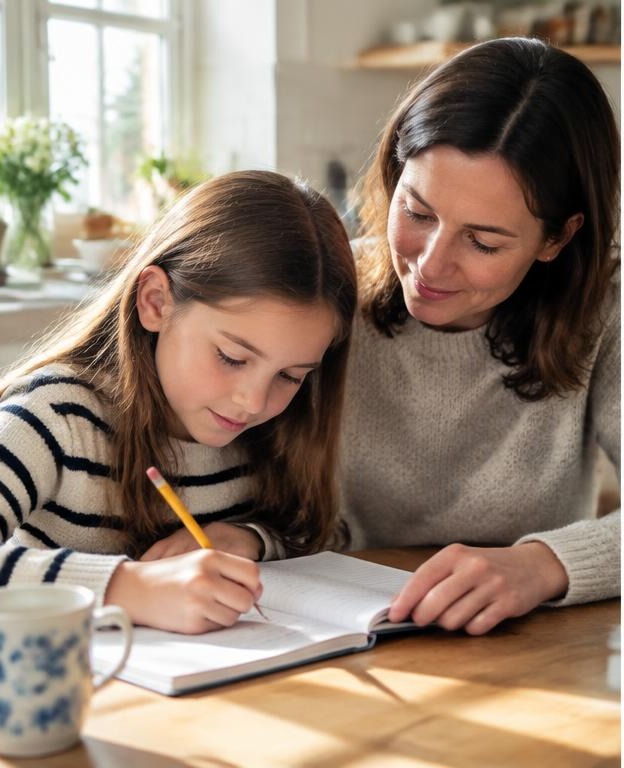
Find out what feels difficult
[SAMPLE TEXT] Reluctance to write can have different causes. A child may have plenty of ideas but find handwriting tiring, or worry that every sentence will be corrected. Ask gently which part feels difficult and listen before choosing a strategy.
[SAMPLE TEXT] Remove one demand at a time. You might write down your child’s spoken ideas, let them type, or offer a short sentence starter. Supporting the physical task does not mean doing the thinking for them; it can make their thinking easier to express.
[SAMPLE TEXT] A willing beginning matters more than a full page.— Liz
Make the first step smaller
[SAMPLE TEXT] Use a topic that genuinely interests your child. A game review, a message to a friend or a description of an invented creature gives writing a reason. Ask what they want the reader to know rather than insisting on a long piece.
Try a two-sentence challenge
[SAMPLE TEXT] Invite your child to write two sentences about something surprising that happened today. Agree that two sentences are the whole task, not a hidden beginning to more work. Read them together and respond to the message before considering one small correction.
Build on a willing beginning
[SAMPLE TEXT] Offer choices within a clear boundary. Would they like to write a list or a short note? Would a pencil or a keyboard help? Too many choices can overwhelm, but two useful options give your child some control over how to begin.
[SAMPLE TEXT] Notice willingness as well as length. A child who starts without an argument or rereads one sentence has taken a meaningful step. If writing remains painful or unusually difficult, discuss what you are noticing with their teacher or a suitable support professional.
Key takeaways
[SAMPLE TEXT]- Ask which part of writing feels difficult.
- Separate ideas from handwriting when helpful.
- Agree on a genuinely small finish.
Hi, I’m Liz.
[SAMPLE TEXT] I share practical ideas to help families make English learning a little calmer, more enjoyable and full of possibility.
Little lessons. Big possibilities.
Make room for English that fits your family. Take the next little step with Good Day English.