Become a story detective
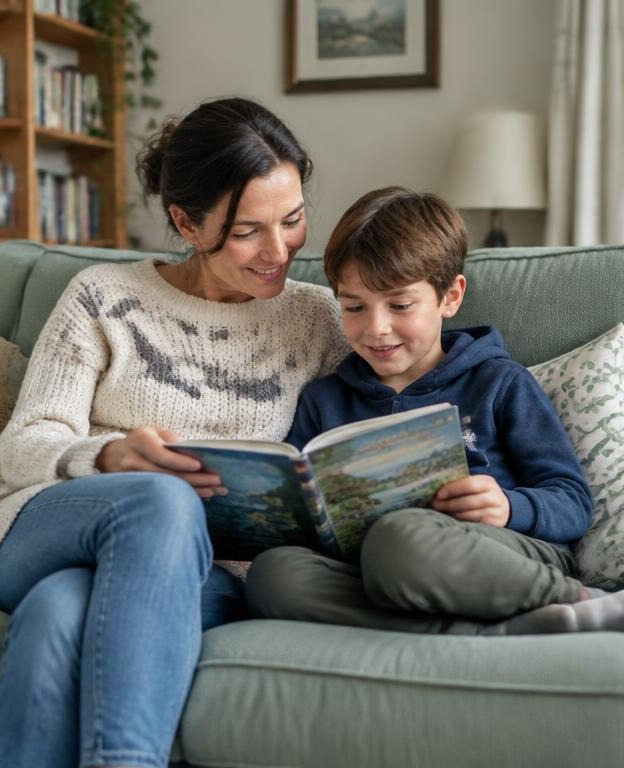
[SAMPLE TEXT] Inference means working out something that is not stated directly. A story might describe a character hiding a shaking hand without saying they are nervous. The reader combines that clue with what they know to suggest how the character could be feeling.
[SAMPLE TEXT] Begin outside a book if that feels easier. Wet umbrellas by the door may suggest it has been raining, though someone might have washed them. Talking about possibilities helps children understand that an inference is a reasoned idea, not simply a random guess.
[SAMPLE TEXT] A good inference is a possibility with a clue behind it.— Liz
Connect clues with what you know
[SAMPLE TEXT] In a story, ask your child to point to the clue before explaining their conclusion. A useful pattern is, “I think… because…” This makes their reasoning visible and gives you a chance to notice whether the text supports the idea.
Explore a picture together
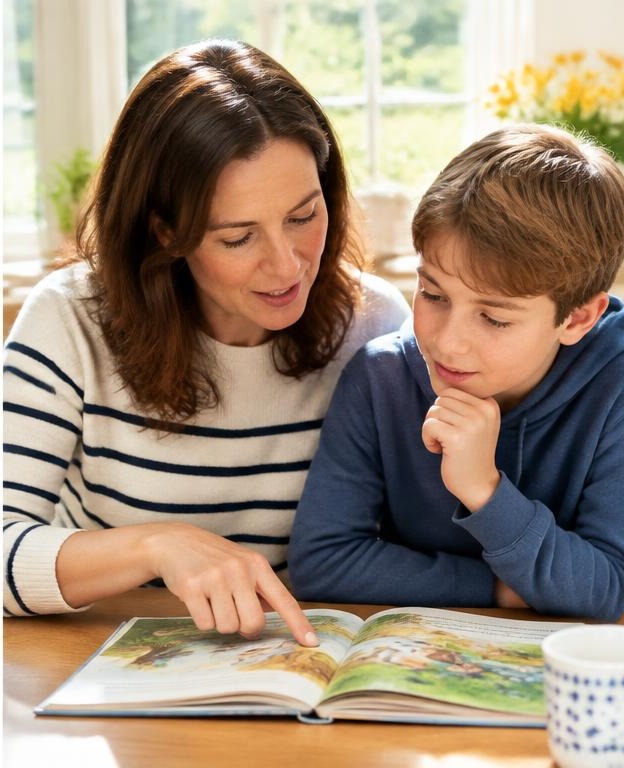
[SAMPLE TEXT] Choose an illustration with several details. Ask what might have happened just before the scene and which details helped your child decide. Share a different possible explanation yourself, then compare which one fits more of the visible clues.
Explain your thinking
[SAMPLE TEXT] Distinguish a sensible inference from a certainty. Two readers may offer different interpretations that both have evidence. Invite your child to reconsider as the story continues. Updating an idea when new clues appear is part of thoughtful reading.
[SAMPLE TEXT] Keep practice conversational and occasional. A picture book, a film scene or a character’s choice can all offer a useful moment. The goal is not to turn everything into a puzzle, but to help your child become comfortable explaining the connections they notice.
Key takeaways
[SAMPLE TEXT]- Find a clue before drawing a conclusion.
- Use “I think… because…” to explain.
- Allow more than one evidence-based interpretation.
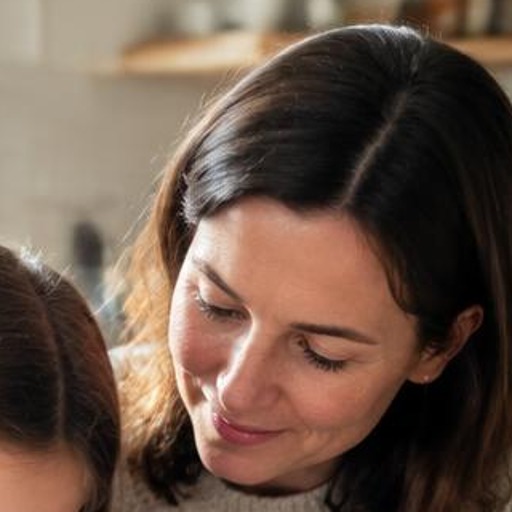
Hi, I’m Liz.
[SAMPLE TEXT] I share practical ideas to help families make English learning a little calmer, more enjoyable and full of possibility.
Little lessons. Big possibilities.
Make room for English that fits your family. Take the next little step with Good Day English.